
Home Gym Setup Guide: How to Build a Home Gym
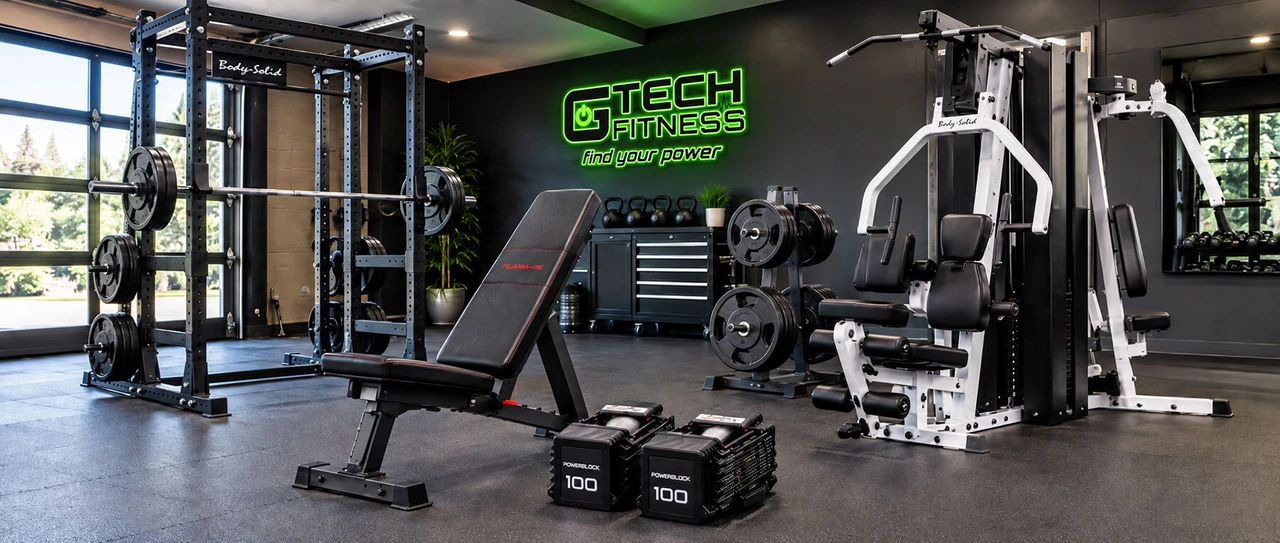
How to Plan a Home Gym That Fits Your Space, Goals and Budget
Estimated Reading Time: 26 Minutes
A well-planned home gym setup can make training more convenient, reduce travel time, and give you direct control over the equipment, layout, schedule, and environment. But building a useful home gym is not just a matter of buying a treadmill, bench, or rack and finding an empty wall. The best setup starts with the room itself, the exercises you actually perform, the space each piece of equipment needs while in use, and a realistic plan for flooring, storage, delivery, electrical needs, and future expansion.
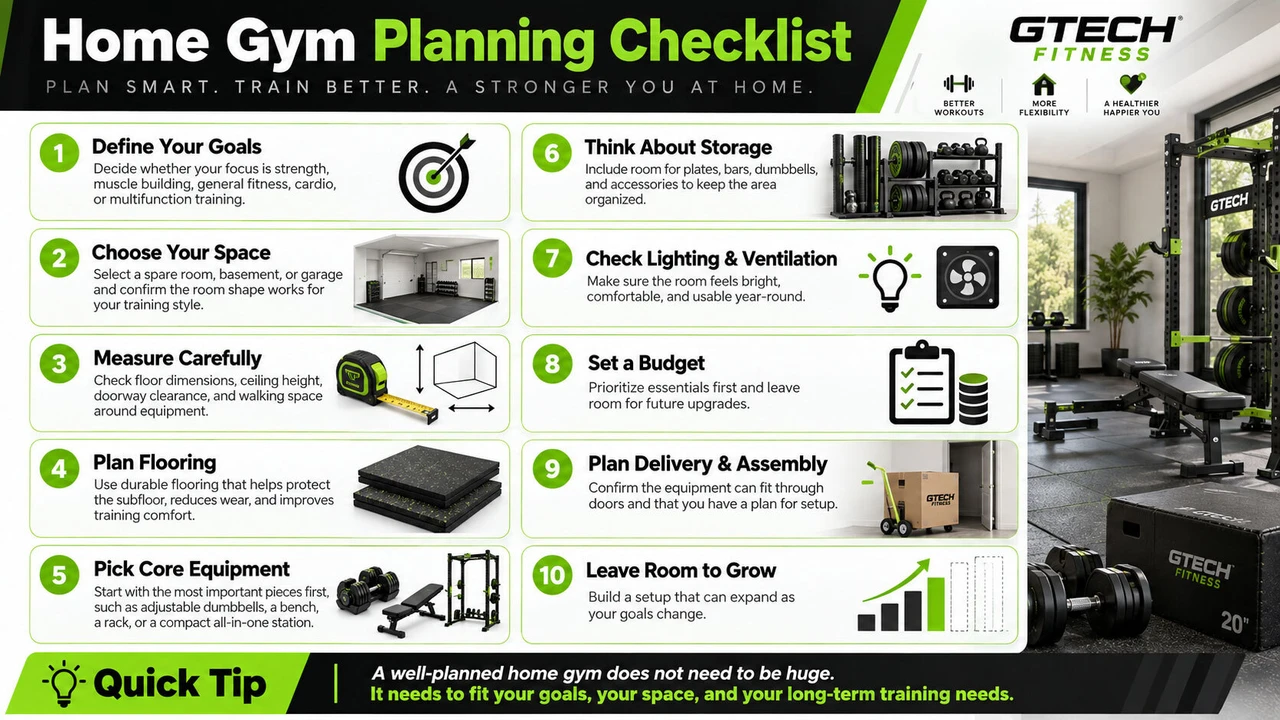
The goal is not to recreate a full commercial fitness center in your house. It is to build the smallest, most practical training space that supports your priorities without creating unnecessary clutter or buying equipment you rarely use. For one person, that might mean adjustable dumbbells and a bench. For another, it may be a rack, barbell, plates, cable machine, cardio machine, mirrors, and dedicated storage. A good home gym should reflect the way you train rather than a generic list of equipment.
Quick Answer: Start by defining your training goals, measuring the room, identifying ceiling and doorway constraints, and deciding which exercises matter most. Buy versatile equipment first, leave enough working clearance around moving parts, protect the floor, plan storage before the room becomes crowded, and verify delivery access before ordering large machines.
A home gym does not need to be large or expensive to be effective. The right setup is the one that gives you consistent access to the exercises you need while fitting safely and comfortably within the space you actually have.
Table of Contents
- Benefits of a Home Gym
- Home Gym vs. Gym Membership
- Define Your Training Goals First
- Choose the Best Room for Your Home Gym
- How Much Space Do You Need?
- Plan the Home Gym Layout
- Choose the Right Gym Flooring
- Home Gym Essentials by Training Goal
- Build a Home Gym by Budget and Phase
- Small Home Gym Setup Ideas
- Garage Gym Planning
- Mirrors, Lighting, Ventilation and Climate
- Electrical, Delivery and Assembly Planning
- Storage and Organization
- Common Home Gym Setup Mistakes
- Frequently Asked Questions
Benefits of a Home Gym
The biggest benefit of training at home is control. You decide when the room is available, which equipment is in it, how it is arranged, what music or entertainment is playing, and whether you want a quiet private workout or a shared family training space. That control can remove several practical barriers that make consistent exercise harder.
1. Less Travel and Setup Time
Driving to a fitness center, parking, checking in, storing personal items, and waiting for equipment can add a surprising amount of time around the workout itself. A home gym removes most of that overhead. Even when the workout is short, being able to walk directly into the training area can make a 30- or 45-minute session much easier to fit into a busy day.
2. Training on Your Own Schedule
A home gym is available when your household schedule allows it. Early mornings, lunch breaks, evenings, weekends, and holidays do not depend on club operating hours. That flexibility can be especially valuable for people with irregular work schedules, children, long commutes, or limited blocks of uninterrupted time.
3. No Waiting for Popular Equipment
In a shared gym, benches, racks, cable stations, dumbbells, and cardio machines can be occupied when you need them. At home, your equipment is available when you are ready to train. This makes it easier to follow planned rest periods, pair exercises into supersets, and keep a workout moving without changing the program because a station is busy.
4. More Privacy and Personal Control
Some people simply prefer training without a crowd. A private room can make it easier to practice unfamiliar exercises, record technique, train at your own pace, or exercise without feeling rushed. You can also keep the room arranged for your own body size and preferred settings instead of resetting shared equipment every session.
5. Equipment Chosen Around Your Goals
A commercial gym must serve many users, so its equipment mix may not match your exact priorities. At home, you can spend your budget on the movements you actually perform. A strength-focused lifter can prioritize a rack, barbell, bench, plates, and dumbbells. Someone who prefers machine-based training can choose a compact multi-station or cable machine. A cardio-focused user can put more of the budget into the treadmill, bike, elliptical, or rower they use consistently.
6. Easier Long-Term Expansion
A home gym does not need to be finished on day one. You can start with a few versatile pieces, train for several months, then add equipment only when a clear need appears. This phased approach often produces a better room than buying everything at once because the next purchase is based on actual training experience rather than guesswork.
7. Potential Long-Term Value
Home equipment has an upfront cost, and a well-equipped room is not automatically cheaper than a membership. However, equipment can remain useful for years, and the room can serve multiple people in the household. The better comparison is not “equipment is free after purchase,” but whether the long-term convenience and avoided recurring costs justify the investment for the way you train.
Home Gym vs. Gym Membership
A home gym is not the best choice for everyone. A commercial facility may offer more equipment, larger training areas, group classes, pools, specialty machines, coaching, and social interaction. A home gym offers convenience, privacy, control, and direct access to the equipment you own. The right choice depends on which benefits matter most.
| Factor | Home Gym | Gym Membership |
|---|---|---|
| Access | Available whenever the household and room allow | Depends on facility hours and travel time |
| Equipment variety | Limited to what you buy and have room to store | Usually much broader, especially in large facilities |
| Privacy | High | Shared public environment |
| Upfront cost | Can range from modest to substantial depending on equipment | Usually lower at the beginning |
| Recurring cost | Maintenance, utilities and future upgrades as needed | Monthly or annual dues plus possible fees |
| Social environment | Private unless you train with family or friends | More opportunities for classes, coaching and community |
| Customization | You control the equipment, layout, lighting, storage and environment | Determined by the facility |
How to Compare the Cost
Instead of relying on a national “average membership price,” compare your actual numbers. Add the membership dues, annual or initiation fees, parking or transportation costs, and any paid classes you would otherwise purchase. For the home gym, include equipment, flooring, delivery, assembly, room improvements, storage, electrical work if needed, and expected maintenance.
A simple break-even estimate is the total home-gym setup cost divided by the recurring monthly costs you expect to avoid. That number is only a planning tool because equipment upgrades, resale value, household use, and changes in membership pricing can all affect the long-term result.
Define Your Training Goals First
The most expensive home gym mistake is buying equipment before deciding how the room will be used. Start with the training program, then choose the equipment that supports it. If you train three days per week with dumbbells and an adjustable bench, a large multi-station machine may not be your first priority. If you prefer machine-based workouts and dislike barbell training, building the room around a power rack makes equally little sense.
Strength and Free-Weight Training
A strength-focused home gym often starts with free weights, a stable bench, and storage. Depending on the program, that can expand to a rack or Smith machine, Olympic bar and plates, heavier dumbbells, and specialty bars. The key is to leave enough working room for the bar, bench positions, plate loading, spotting, and movement around the station.
Bodybuilding and Hypertrophy
Muscle-building programs benefit from exercise variety and stable accessory work. Dumbbells, an adjustable bench, cable equipment, and targeted weight machines can complement compound strength exercises. A larger room may include separate leg, back, chest, shoulder, and arm stations, while a compact room may use a functional trainer or dual-function machines to cover more movements per square foot.
General Fitness
A general-fitness setup does not need to specialize. One versatile resistance system, a small free-weight area, open floor space, and one cardio option can support strength, conditioning, mobility, and circuit training without filling the room with dedicated stations.
Cardio and Endurance
For cardio-focused training, prioritize the machine you are most likely to use consistently. Treadmills, bikes, ellipticals, rowers, and stair climbers have very different footprints, movement envelopes, electrical requirements, and ceiling-clearance needs. Check the specifications of the exact model before designing the room around it.
Mixed Household Use
If several people will use the gym, choose equipment that adjusts quickly across different body sizes and strength levels. Adjustable benches, selectorized machines, cable systems, dumbbells, and cardio machines with simple user controls can make a shared room easier to use than equipment that requires lengthy setup changes.
Choose the Best Room for Your Home Gym
The “best” home gym room is not always the largest room. Access, ceiling height, floor construction, ventilation, noise, delivery path, moisture, temperature, and household traffic can matter just as much as square footage.
| Room Type | Advantages | Planning Concerns |
|---|---|---|
| Garage | Large doors, concrete floor, flexible layout, good fit for racks and free weights | Temperature, humidity, floor slope, garage-door clearance, shared vehicle space |
| Basement | Separation from living areas, often suitable for dedicated rooms | Ceiling height, stairs, moisture, delivery access, low beams or utilities |
| Spare Room | Climate controlled and convenient | Floor protection, structural loading, noise, door width, limited equipment footprint |
| Bonus / Flex Room | Can support mixed cardio and strength use | Shared household functions, storage conflicts, upper-floor loading and vibration |
| Dedicated Outbuilding | Maximum separation and customization | Climate control, electrical service, security, permits and construction cost |
Check Structural Loading When Needed
Heavy machines, dumbbell racks, plate trees, and loaded racks can place substantial concentrated weight in a small area. Concrete slabs are common home-gym locations for this reason, but upper floors and raised structures deserve more planning. If you are placing a large amount of weight on an upper floor or are unsure about the building structure, consult a qualified building professional rather than guessing.
Measure the Delivery Route, Not Just the Room
A machine can fit perfectly in the final location and still be impossible to move through the house. Measure exterior doors, interior doors, hallways, stair widths, stair turns, landings, low ceilings, and tight corners. Compare those measurements with the packaged and assembled dimensions provided for the exact equipment.
How Much Space Do You Need for a Home Gym?
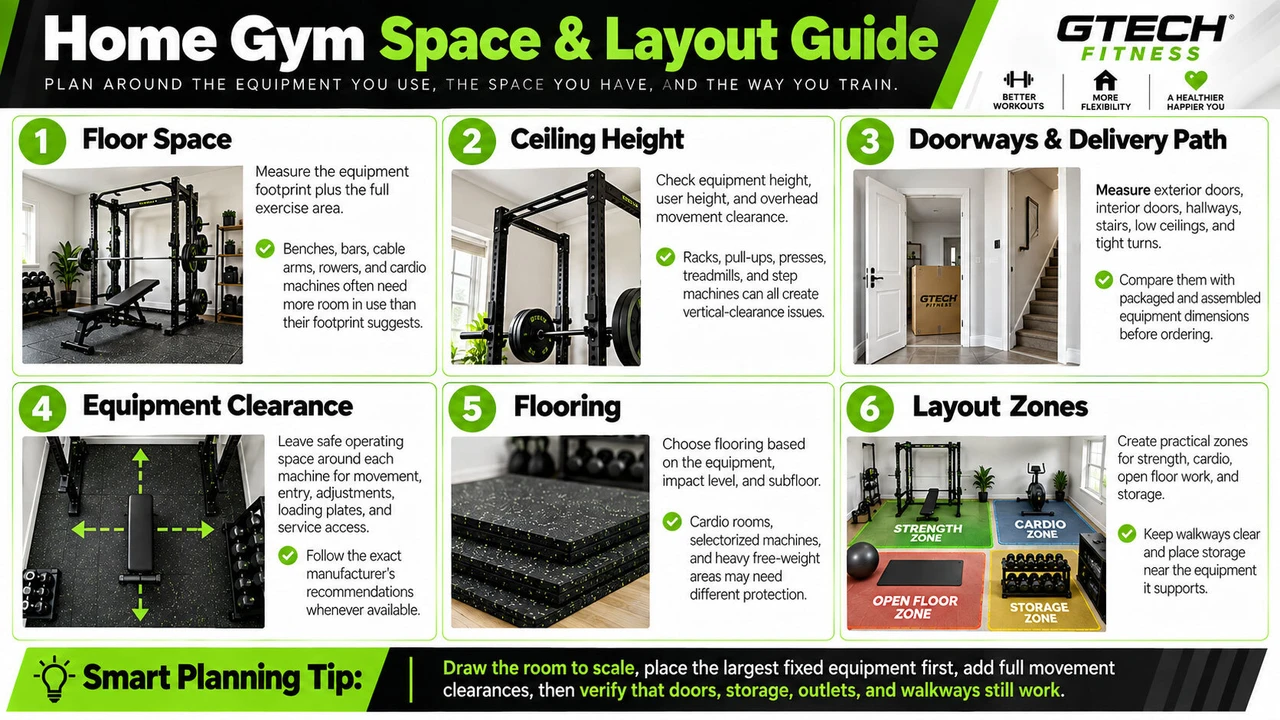
There is no single minimum square footage because the answer depends on the equipment and exercises. The better approach is to divide the room into three types of space: equipment footprint, operating clearance, and circulation space.
Equipment Footprint
This is the floor area physically occupied by the machine, rack, bench, or storage unit. Manufacturer dimensions are useful here, but the footprint alone does not tell you whether the equipment can actually be used comfortably.
Operating Clearance
Operating clearance is the space needed while the equipment is moving. A treadmill belt, elliptical pedals, cable arms, functional-trainer handles, bench back pad, selectorized movement arm, barbell sleeves, or rowing rail may extend beyond the stationary footprint. You also need room to load plates, change a selector pin, adjust a seat, enter the station, and perform the exercise.
Circulation Space
Leave a practical path through the room so you do not have to step over bars, plates, benches, or moving equipment. A gym that technically “fits” on paper can still feel unusable if every exercise requires moving three other pieces first.
Planning Rule: Draw the room to scale and place the largest fixed equipment first. Then add the full exercise envelope around each item, not just the published footprint. Finally, verify that doors, walkways, storage, electrical outlets, and adjustment points remain accessible.
Small Home Gym
A small room can work well when equipment performs multiple jobs. Adjustable dumbbells, an adjustable weight bench, resistance bands, a compact cable station, or a multi-function strength unit can provide a broad exercise library without requiring multiple dedicated machines.
Medium Home Gym
With more floor space, you can separate strength and cardio zones. A rack or Smith machine, bench, dumbbell area, cable station, and one cardio machine can coexist more comfortably when there is enough room to keep the main lifting paths clear.
Large Home Gym
A larger dedicated room can support commercial-style zones: free weights, selectorized machines, cardio, stretching, and storage. The challenge becomes layout efficiency rather than simple fit. Keep related equipment together and avoid creating long walking paths between pieces commonly used in the same workout.
Plan the Home Gym Layout
Good home gym design is mostly about reducing conflicts. A bench should not block the only walkway. A cable station should not open into a treadmill. A barbell should not extend across a doorway. Storage should not require walking through the middle of someone else's exercise area.
Start With Fixed Equipment
Place the equipment that is hardest to move first: treadmills, multi-station gyms, functional trainers, large racks, selectorized machines, and heavy storage systems. Smaller benches, dumbbells, mats, and accessories can be arranged around those anchors.
Group Equipment by Training Zone
Keeping related equipment together makes the room easier to use. Dumbbells belong near benches and dumbbell storage. Bars and plates belong near racks. Cable attachments should be stored near the cable station. Cardio equipment can share a wall with access to power and entertainment displays where appropriate.
Protect Moving Paths
Check every moving part before finalizing placement. Open the bench to its highest incline. Move selectorized arms through the full path. Extend adjustable cable columns. Load a bar with full-size plates. Slide the rower seat completely back. Incline the treadmill if applicable. A room layout should work during the exercise, not only when every machine is parked.
Keep Mirrors Out of Impact Zones
Mirrors can make a gym feel larger and help users observe positioning, but they should not be placed where barbells, plates, cable handles, or moving machine parts are likely to strike them. Mounting method and wall construction matter as much as appearance.
Choose the Right Gym Flooring
Gym flooring helps protect the subfloor, improves traction, reduces equipment movement, and creates a more durable training surface. The right material and thickness depend on the room, equipment, subfloor, and whether weights will be placed down gently or dropped.
Rubber Flooring
Rubber gym flooring is a common choice for strength rooms because it is durable, provides traction, and helps protect the underlying surface from normal equipment use. Rolls, tiles, and mats each have different installation and replacement advantages. Follow the flooring manufacturer's guidance for the subfloor and intended use.
Cardio Equipment
Cardio machines may not require the same impact protection as free-weight areas, but a stable protective surface can help reduce movement, protect finished floors, and define the equipment zone. Check the cardio manufacturer's floor and mat recommendations before installation.
Heavy Free-Weight Training
If your training includes heavy barbells, plate loading, or intentionally dropping weights, plan the lifting area separately. Equipment type, drop height, plate material, subfloor construction, and building structure all affect the flooring solution. Do not assume that a thin general-purpose mat provides the same protection as a purpose-built lifting surface.
Moisture and Subfloor Conditions
Basements and garages can have moisture concerns that are different from finished interior rooms. Make sure the subfloor is suitable for the flooring system and that any moisture issue is addressed before covering the surface.
Home Gym Essentials by Training Goal
“Essential” equipment depends on the program. The best home gym equipment is not necessarily the most expensive or the most versatile on paper. It is the equipment that supports the exercises you will perform consistently.
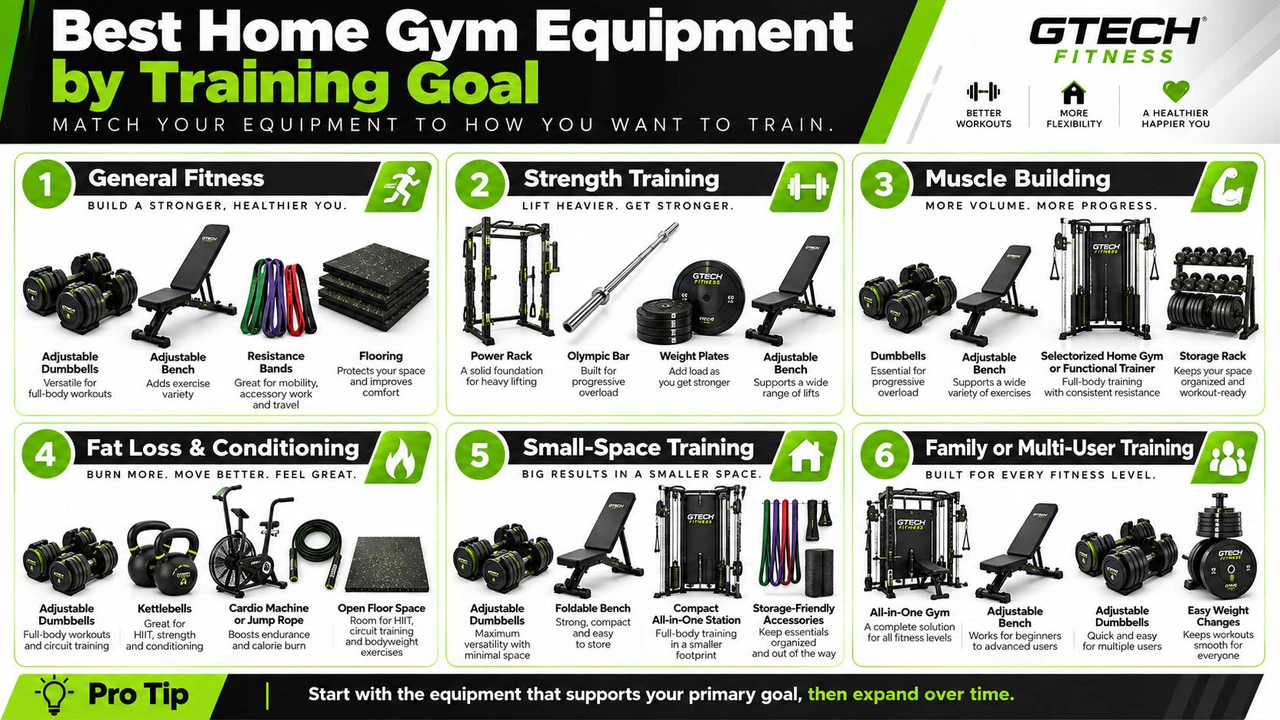
| Training Goal | Start With | Add Later |
|---|---|---|
| General Strength | Dumbbells, adjustable bench, open floor space | Rack, barbell, plates, cable station |
| Barbell Strength | Rack, barbell, plates, bench, storage | Dumbbells, specialty bars, cable or accessory machines |
| Bodybuilding / Hypertrophy | Dumbbells, adjustable bench, cable station or multi-gym | Targeted chest, back, leg, shoulder and arm machines |
| Cardio / Endurance | One preferred cardio machine plus mobility space | Second cardio modality, light resistance equipment |
| Small-Space Fitness | Adjustable dumbbells, folding or compact bench, bands | Compact cable machine or multi-function trainer |
| Mixed Household Use | Adjustable resistance, dumbbells, bench, one cardio machine | Multi-station or selectorized equipment with fast adjustments |
Dumbbells
Dumbbells provide a large exercise library with relatively little setup. Fixed sets are fast to use and work well when more than one person trains at the same time. Adjustable dumbbells save space and can be a strong first purchase for a compact room.
Adjustable Bench
A stable adjustable bench expands pressing, rowing, shoulder, arm, and supported-exercise options. Before buying, check the bench dimensions in both flat and upright positions and make sure it can move through the room without interfering with nearby equipment.
Rack, Smith Machine or Strength Station
Users who prioritize barbell or guided bar training may build around a rack or Smith machine. These pieces need more planning because the bar path, plate storage, bench placement, spotting area, and anchoring requirements can affect the room layout.
Multi-Station Gym
A multi-station gym can provide several exercises from one connected frame. It can be especially useful when the household prefers selectorized resistance and wants to avoid storing loose plates. Check the full working footprint because users may need access to multiple sides of the machine.
Cable Machine or Functional Trainer
Cable machines can cover presses, rows, pulldowns, raises, curls, extensions, chops, and many accessory movements. They are versatile, but the usable cable path may require significantly more open space than the frame footprint suggests.
Cardio Equipment
Choose cardio equipment based on the movement you enjoy and will use consistently. Also consider step-up height, ceiling clearance, electrical requirements, noise, floor protection, and access for service.
Build a Home Gym by Budget and Phase
You do not need to buy the finished room all at once. A phased plan can prevent expensive mistakes and spread the investment over time.
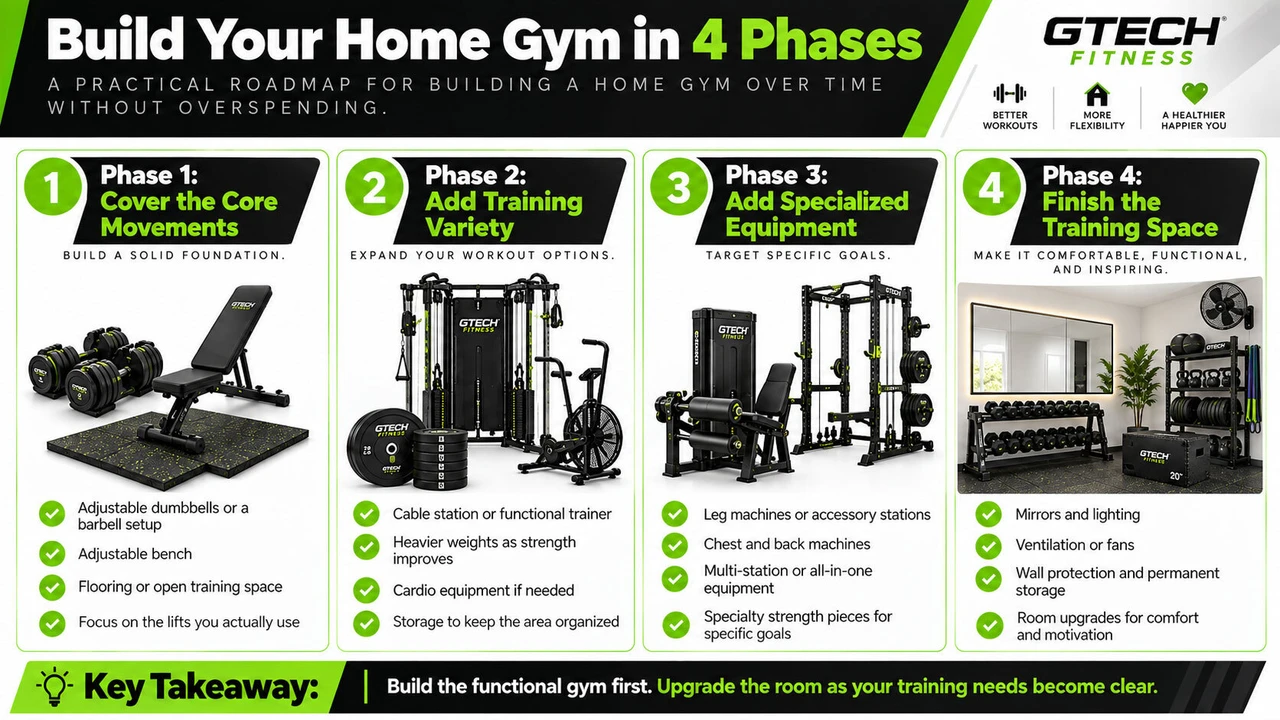
Phase 1: Cover the Core Movements
Buy the minimum equipment needed for your actual program. For many users, that means dumbbells, a bench, a mat or flooring, and open space. A barbell-focused lifter may start with a rack, bar, plates, and bench instead. The point is to make the room functional before making it complete.
Phase 2: Add Range and Convenience
After using the gym consistently, identify what is missing. You may discover that you want a cable station for pulldowns and accessory work, a heavier dumbbell range, better storage, or a cardio option for warm-ups and conditioning.
Phase 3: Add Specialized Equipment
Dedicated leg, chest, back, arm, or abdominal machines make more sense after the basic program is established and the remaining floor space is known. Specialty equipment should solve a repeated training need rather than simply fill an empty corner.
Phase 4: Improve the Room Itself
Once the equipment mix is stable, upgrades such as mirrors, permanent storage, lighting, ventilation, entertainment, wall protection, and improved flooring can make the space easier and more enjoyable to use.
Budget Principle: Put the largest share of the budget into equipment you will use every week. A smaller room with high-use equipment is usually more valuable than a crowded room filled with specialty pieces that rarely enter the program.
Small Home Gym Setup Ideas
A small home gym can be highly effective if the equipment is chosen around movement coverage rather than quantity. The key is to avoid buying several pieces that all solve the same problem.
Use Vertical Storage
Wall-mounted accessory storage, compact dumbbell racks, plate trees, and bar holders can keep the training floor open. Make sure any wall-mounted system is installed according to its mounting requirements and is appropriate for the wall construction.
Choose Multi-Use Equipment
An adjustable bench supports far more exercises than a flat bench alone. A functional trainer can replace several dedicated cable stations. Adjustable dumbbells can replace many fixed pairs. A dual-function selectorized machine can cover two related exercises within one frame.
Preserve Open Floor Space
Do not fill every available square foot. Open space is equipment too: it allows lunges, carries, mobility work, bodyweight exercises, kettlebell training, and access to the machines you already own.
Use Mobile Equipment Carefully
Benches and small storage pieces with transport wheels can make a compact room more flexible. However, equipment should be stable during use and should not need to be moved through tight obstacles before every exercise.
Garage Gym Planning
A garage can be one of the best locations for a home gym, but it has a different set of planning issues than a finished interior room.
Check the Floor
Garage slabs may slope for drainage. A small slope may not matter for some equipment, but it can affect benches, racks, selectorized machines, and cardio equipment. Check the installation guidance for each piece and determine whether the intended location provides a suitable surface.
Plan Around the Garage Door
Measure the open garage door, tracks, opener, springs, and ceiling hardware. A tall rack or functional trainer may fit beneath the closed door but interfere when the door opens. Ceiling-mounted storage can create the same conflict.
Control Heat, Cold and Humidity
Temperature and moisture can affect training comfort and equipment care. Ventilation, fans, dehumidification, insulation, and climate control may be useful depending on the region and the equipment manufacturer's environmental recommendations.
Separate Vehicles From the Training Area
If the garage remains a mixed-use space, define the gym zone clearly. Keep bars, benches, storage, cables, and floor mats out of vehicle paths, and make sure parked vehicles do not block access to exits or training equipment.
Keep the Room Clean
Garages tend to collect more dust, dirt, pollen, moisture, and debris than interior rooms. Regular cleaning helps protect pads, guide rods, cables, electronics, flooring, and moving components.
Mirrors, Lighting, Ventilation and Climate
Mirrors
Mirrors can brighten the room, make a smaller space feel more open, and let users observe body position during exercises. Gym mirrors should be placed where they provide a useful view without sitting directly behind likely impact zones. A mirror is a visual aid, not a substitute for instruction or proper technique.
Lighting
Use even lighting that makes the floor, equipment adjustments, weight markings, and walkways easy to see. Avoid layouts where bright fixtures shine directly into the eyes during bench exercises. If possible, position lights so racks and tall machines do not create deep shadows over working areas.
Ventilation
Resistance training and cardio can generate significant heat in a small room. Air movement can make the gym more comfortable and reduce the temptation to skip training because the room feels stale or overheated. Garages and basements may require more deliberate ventilation than finished living spaces.
Temperature and Humidity
Keep the space within the operating conditions recommended for your equipment, especially for cardio machines and electronics. Excessive moisture can also affect metal surfaces and some flooring systems over time.
Electrical, Delivery and Assembly Planning
Verify Electrical Requirements Before Ordering
Motorized cardio equipment and some powered strength equipment may have specific outlet, circuit, grounding, or placement requirements. Do not assume that any nearby extension cord or outlet is appropriate. Follow the electrical requirements for the exact model and use a qualified electrician when new service is needed.
Keep Cords Out of Walkways
Plan powered equipment near suitable outlets so cords do not cross lifting zones, doorways, or walk paths. Also leave access to switches, plugs, and service panels.
Understand Delivery Type
Large fitness equipment may ship by parcel or freight, and delivery service levels vary. Before ordering, know where the carrier is expected to leave the shipment and whether moving the equipment inside, upstairs, or into the final room is included. Do not assume that a freight shipment automatically includes inside delivery or assembly.
Check Packaged Dimensions and Weight
Some equipment ships partially disassembled, which can make delivery easier than moving the fully assembled machine. Other items arrive in large cartons or on pallets. Verify the package dimensions and weights when available, then compare them with doors, stairs, turns, elevators, and the final room.
Plan Assembly Space
A machine may need more open floor area during assembly than it occupies when finished. Keep enough room to lay out frame pieces, hardware, cables, and tools without blocking the only exit from the room.
Storage and Organization
Storage should be part of the initial layout, not an afterthought. Loose equipment on the floor makes a room feel smaller and can interfere with safe movement.
Dumbbell Storage
A properly sized rack keeps fixed dumbbells organized and easier to return after each set. Position it close to the bench area without narrowing the main walkway. For full fixed-weight sets, browse dumbbell sets with racks.
Plate and Bar Storage
Keep Olympic plates and bars close to the rack or strength station they serve. This reduces unnecessary carrying through the room and helps prevent plates from collecting around the lifting platform.
Cable Attachments and Accessories
Handles, ropes, collars, bands, belts, and small accessories quickly create clutter if they do not have a dedicated home. Hooks, shelves, bins, and accessory racks work best when they are placed near the equipment where the items are used.
General Gym Storage
Gym storage racks can consolidate plates, dumbbells, kettlebells, medicine balls, and accessories, depending on the design. Check both loaded capacity and footprint before using one as the room's primary storage solution.
Common Home Gym Setup Mistakes
Buying Equipment Before Measuring the Room
A product page dimension is only the beginning. Measure the room, doorway, ceiling, delivery route, working clearance, and adjustment space before ordering large equipment.
Planning Around Footprints Instead of Exercise Space
A machine can fit and still be unusable. Account for bars, moving arms, bench travel, cable paths, foot platforms, rower rails, treadmill decks, and space for the user to enter and exit the station.
Trying to Recreate a Commercial Gym
Most homes do not need one machine for every muscle group. Start with versatile equipment and add dedicated stations only when they clearly improve your program.
Ignoring Storage
Plates, dumbbells, bars, bands, handles, mats, and accessories need a planned location. If storage is not included in the layout, usable floor space disappears quickly.
Buying for Aspirational Workouts Instead of Real Workouts
Choose equipment based on the training you already enjoy or are committed to learning. A cardio machine that becomes a clothes rack or a specialty strength station used twice a year is expensive floor space.
Forgetting Ceiling Height
Tall racks, cable towers, multi-stations, overhead presses, pull-ups, step machines, and elevated treadmill decks can all create vertical-clearance problems. Measure the highest point of both the equipment and the exercise.
Ignoring the Subfloor
Finished hardwood, tile, carpet, concrete, and upper-floor structures have different needs. Protect the surface and verify that the floor is appropriate for the weight and impact level of the planned training.
Underestimating Delivery
A basement gym with a narrow stair turn may eliminate equipment that would fit easily in a garage. Delivery access should be checked before the purchase, not when the freight truck arrives.
Overcrowding the Room
More equipment does not automatically create a better gym. If each workout requires moving benches, stepping around plates, and squeezing between machines, the room is overfilled.
Frequently Asked Questions
What do I need to set up a home gym?
Start with a suitable room, protective flooring where needed, and the minimum equipment required for your training program. For many users, that may be dumbbells and a bench. Barbell lifters may prioritize a rack, bar and plates, while cardio-focused users may start with one preferred cardio machine.
How much space do I need for a home gym?
There is no universal minimum. Measure the equipment footprint, the full movement and adjustment clearance around each piece, and the walkway space required to move through the room. A small room can work well with compact multi-use equipment, while large commercial-style machines need considerably more working space.
What is the best flooring for a home gym?
Rubber flooring is a common choice for strength areas because it is durable and helps protect the underlying floor. The correct material and thickness depend on the equipment, subfloor, impact level, and whether weights will be dropped. Follow the flooring and equipment manufacturers' recommendations for your application.
Is a home gym cheaper than a gym membership?
It can be over time, but not always. A basic setup may cost less than years of membership dues, while a premium room with multiple commercial machines can cost much more. Compare your actual membership expenses with the full cost of equipment, flooring, delivery, assembly, room improvements, and future maintenance.
What equipment should I buy first for a home gym?
Buy the equipment that covers the greatest number of exercises in your actual program. Dumbbells and an adjustable bench are versatile for general strength. Barbell lifters may start with a rack, bench, bar and plates. Machine-oriented users may get more value from a compact cable system or multi-station gym.
Can I build a good home gym in a small room?
Yes. Adjustable dumbbells, a compact bench, resistance bands, vertical storage, and a multi-use cable or strength system can provide substantial training variety. Preserve enough open floor space to use the equipment comfortably.
Is a garage a good place for a home gym?
Often, yes. Garages can provide a durable slab, large access door, and flexible layout. Check floor slope, garage-door clearance, heat, cold, humidity, electrical access, vehicle traffic, and local environmental conditions before installing equipment.
Do I need mirrors in a home gym?
No. Mirrors are optional. They can make the room feel larger and allow you to observe body position, but they are not required for effective training. If you install them, keep them away from likely impact paths and use an appropriate mounting system.
Should I buy cardio or strength equipment first?
Start with the type of training you perform most often. If your main goal is strength, prioritize resistance equipment. If you primarily run, cycle, row, or use an elliptical, the cardio machine may deserve more of the initial budget. Mixed-use gyms can add the second category later.
Should I buy fixed or adjustable dumbbells for a home gym?
Adjustable dumbbells are space efficient and can replace many fixed pairs. Fixed dumbbells are faster to change between and can be more convenient when several people train or when workouts use frequent weight changes. The better choice depends on space, budget and training style.
Do I need a power rack in a home gym?
Only if your program benefits from one. Racks are valuable for barbell squats, presses, pull-ups and related strength work, but a dumbbell-, machine- or cardio-focused home gym may not need a rack at all.
How should I plan for future home gym expansion?
Leave at least one flexible zone in the room rather than filling every wall immediately. Keep electrical access, storage, and walkways adaptable. When buying a major piece, consider whether it blocks the only practical location for a future rack, cable machine, cardio machine, or storage unit.
Can I put heavy gym equipment upstairs?
Possibly, but the answer depends on the building structure, equipment weight, load distribution, and intended use. If you are planning a large concentration of heavy dumbbells, plates, racks, or machines on an upper floor and are unsure about capacity, consult a qualified building professional.
How do I keep a home gym organized?
Assign a storage location to every movable item. Keep dumbbells on racks, plates near the rack or machine they serve, bars in approved storage, and small accessories on hooks, shelves, or bins. Good storage protects your usable training floor.
What is the biggest home gym planning mistake?
Buying equipment based only on product footprint. The room also needs space for the user, the full exercise motion, adjustments, plate loading, cable travel, storage, doors, walkways and service access.
Final Thoughts on Building a Home Gym
A successful home gym is not defined by how many machines it contains. It is defined by how well the space supports the training you actually do. Start with your goals, measure carefully, protect the floor, leave realistic operating clearance, and buy versatile equipment before specialized pieces. Then expand only when your workouts show you what the room genuinely needs.
That approach works whether you are converting a corner of a spare room, designing a garage gym, or building a complete strength and cardio space. A thoughtful layout makes every purchase work harder, keeps the room easier to use, and gives you room to adapt as your training changes.
When you are ready to equip the space, browse fitness equipment for home gyms at Gtech Fitness, including strength equipment, cardio machines, free weights, flooring, mirrors and storage solutions.
EXPLORE POPULAR ARTICLES
-

Strength Training for Beginners: Exercises & Workout Guide
Oct 06, 2026How to Start Strength Training and Build a Program That Works Estimated Reading Time: 30 Minutes St
-
Home Gym Setup Guide: How to Build a Home Gym
Oct 06, 2026How to Plan a Home Gym That Fits Your Space, Goals and Budget Estimated Reading Time: 26 Minutes A
-
Weight Machine Training: Benefits, Exercises & Workout Guide
Oct 05, 2026How Weight Machine Training Builds Strength and Muscle Estimated Reading Time: 24 Minutes Weight ma