
Dumbbell Chest Workout: Exercises, Form & Workout Plans
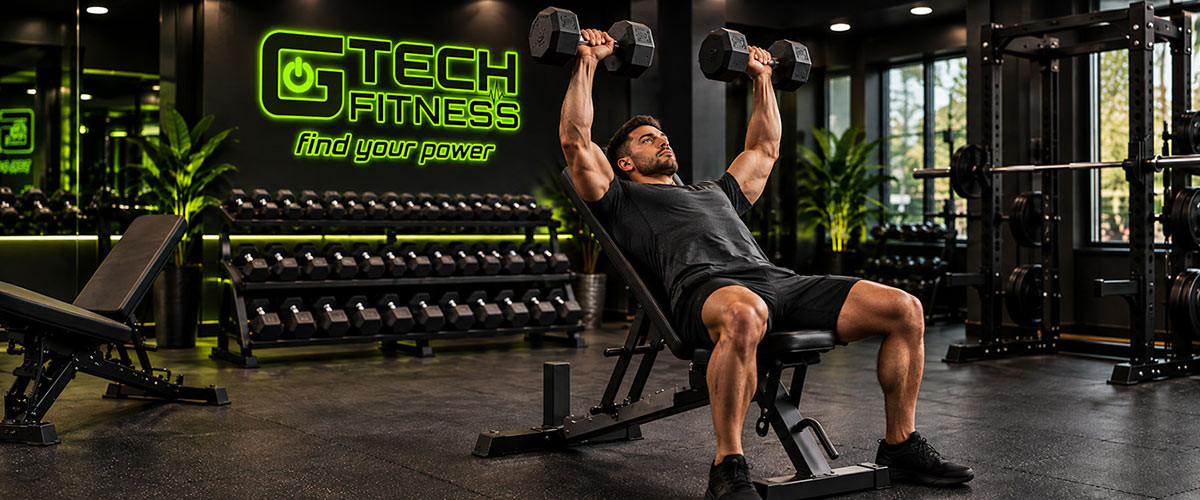
How to Build a Complete Chest Workout with Dumbbells
Estimated Reading Time: 22 minutes
A well-designed dumbbell chest workout can build pressing strength, increase chest muscle size, and give you enough exercise variety to train effectively in a home gym or commercial fitness center. Dumbbells allow each arm to manage its own load, give the lifter freedom to adjust grip and pressing path, and work with flat, incline, decline, floor, and fly variations without requiring a separate machine for every movement.
The key is not simply doing more exercises. Productive chest training comes from selecting a few movements that complement one another, using a controlled range of motion, progressing resistance over time, and performing enough weekly work to challenge the chest without turning every session into unnecessary volume. The most recent resistance-training guidance also reinforces that consistency and progressive training matter more than complicated techniques or taking every set to complete failure.
Dumbbell Chest Workout: Quick Answer
A complete dumbbell chest workout usually combines one flat press, one incline press, and one chest-focused accessory movement such as a fly or squeeze press. Most lifters can build productive sessions with 8–12 hard working sets, using heavier rep ranges for pressing strength and moderate-to-higher rep ranges for hypertrophy and accessory work. You do not need every chest exercise in one workout, and you do not need to train to failure on every set.
Table of Contents
- Why Train Chest with Dumbbells?
- Chest Anatomy for Dumbbell Chest Workouts
- Best Dumbbell Chest Exercises at a Glance
- Dumbbell Bench Press
- Incline Dumbbell Press
- Decline Dumbbell Press
- Dumbbell Chest Fly
- Incline Dumbbell Fly
- Dumbbell Pullover
- Dumbbell Squeeze Press
- Additional Dumbbell Chest Variations
- Dumbbell Chest Workout Plans
- Dumbbell Chest Workout Sets, Reps, Weight & Progression
- Warm-Up & Setup
- Common Dumbbell Chest Training Mistakes
- Safety & Shoulder-Friendly Adjustments
- Equipment for Dumbbell Chest Training
- Frequently Asked Questions
Why Train Chest with Dumbbells?
Chest exercises with dumbbells are valuable because each arm controls its own implement instead of sharing one connected bar. That makes it easier to notice side-to-side differences and prevents the stronger arm from directly moving the weaker arm's share of the load. Independent loading does not automatically correct an imbalance, but it gives you a clearer way to train each side through the same intended range and effort.
Dumbbells also allow more freedom in hand position and pressing path than a fixed bar or guided machine. A neutral or semi-neutral grip may feel better for some lifters, while others prefer a more traditional palms-forward position. The weights can also travel slightly outside or inside the path a barbell would require. That freedom can make dumbbells adaptable to different shoulder structures and training preferences, although no single grip or path is universally best.
Another advantage is exercise variety. One pair of dumbbells can be used for flat presses, incline presses, decline presses, fly variations, squeeze presses, pullovers, floor presses, unilateral presses, and other upper-body movements. If you are building a training space, our Commercial Dumbbell Buying Guide explains the major dumbbell styles and how they fit different facilities.
Dumbbells Are Effective, but Not Automatically Better Than Barbells or Machines
Dumbbells, barbells, and chest machines can all build chest strength and muscle when the exercise is loaded appropriately and progression is sustained. Barbells often allow more total weight to be used, machines can reduce stability demands and simplify training near fatigue, and dumbbells provide independent-arm loading with a freer movement path. The best tool depends on the goal, the lifter, and the exercise rather than a universal ranking.
Chest Anatomy for Dumbbell Chest Workouts
The pectoralis major is the large chest muscle most people are trying to develop with presses and flyes. Its fibers are commonly discussed in regions, including a clavicular or "upper chest" region and a larger sternocostal region that spans much of the middle and lower chest. The pectoralis minor sits underneath the pectoralis major and is not the visible muscle people usually mean when discussing chest size.
Changing the bench angle changes how the chest and front deltoid contribute to pressing. Research comparing bench inclinations has found that an incline around 30 degrees can increase activation of the clavicular portion of the pectoralis major, while steeper inclines increasingly shift work toward the anterior deltoid. That makes a moderate incline a useful starting point when upper-chest emphasis is the goal. Exact setup still depends on the bench, the person's anatomy, and comfort.
A flat press remains an excellent general chest movement and does not need to be replaced by multiple angles. Decline work can place more emphasis on lower sternocostal fibers for some lifters, but it is optional rather than mandatory. A complete program can be built around flat and incline pressing alone if those movements fit the person well.
What about the "inner chest"? There is no separate inner-chest muscle that can be isolated independently. Exercises such as squeeze presses create strong horizontal-adduction intent and can feel concentrated near the center of the chest, but they still train the pectoralis major as a whole rather than a distinct inner-chest compartment.
Best Dumbbell Chest Exercises at a Glance
| Exercise | Primary Emphasis | Best Use | Typical Rep Range |
|---|---|---|---|
| Flat Dumbbell Bench Press | Broad pectoralis major, triceps, front deltoids | Primary strength or hypertrophy press | 5–12 |
| Incline Dumbbell Press | Clavicular chest, front deltoids, triceps | Upper-chest emphasis | 6–12 |
| Decline Dumbbell Press | Sternocostal chest, triceps | Optional lower-chest-biased press | 6–12 |
| Dumbbell Chest Fly | Pectoralis major through horizontal adduction | Chest-focused accessory work | 10–15 |
| Incline Dumbbell Fly | Clavicular chest with front-delt contribution | Upper-chest accessory work | 10–15 |
| Dumbbell Squeeze Press | Chest and triceps with continuous inward pressure | Controlled accessory or finisher | 10–15 |
| Dumbbell Pullover | Chest, lats, serratus and shoulder extensors | Optional accessory for upper-body training | 8–15 |
| Dumbbell Floor Press | Chest and triceps with limited shoulder extension | No-bench training or reduced bottom range | 6–12 |
1. Dumbbell Bench Press
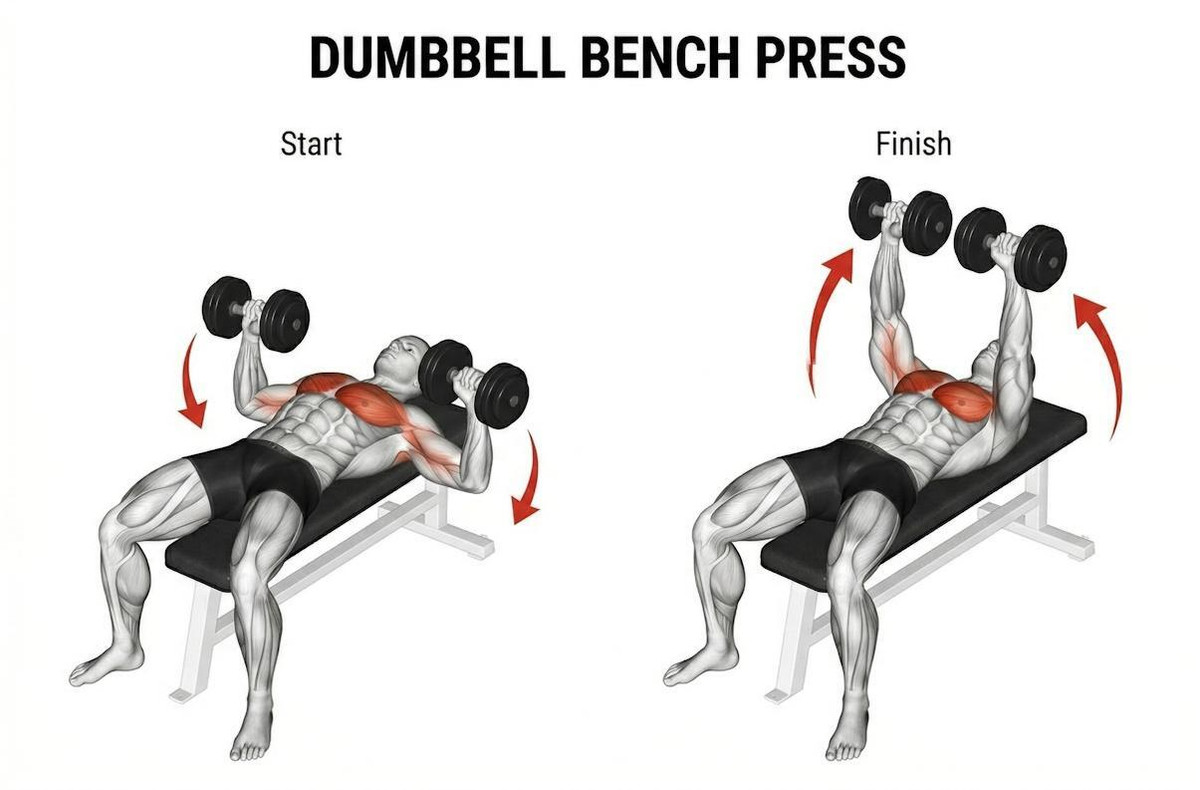
The dumbbell bench press is the most useful starting point for most dumbbell-only chest programs. It trains the pectoralis major through a large pressing range while the triceps extend the elbows and the anterior deltoids assist at the shoulder. Because the hands are not fixed to one bar, you can adjust grip and elbow path to find a repeatable position that fits your shoulders.
How to Perform the Dumbbell Bench Press
- Sit at the end of a flat bench with one dumbbell resting securely on each thigh.
- Use your legs to help guide the dumbbells into position as you lie back.
- Plant your feet, keep the shoulder blades controlled against the bench, and position the dumbbells near the sides of the chest.
- Press the dumbbells upward without forcefully crashing them together at the top.
- Lower under control until you reach the deepest comfortable position you can maintain without losing shoulder control.
- Repeat with the same path and tempo on both sides.
Form Cues
- Keep the wrists stacked over the forearms instead of letting the dumbbells fold backward.
- Avoid forcing the elbows straight out to 90 degrees from the torso.
- Use a controlled eccentric rather than dropping quickly into the bottom position.
- Keep the chest and upper back stable instead of turning every repetition into a bridge.
Common Mistake: Chasing More Range Than You Can Control
Dumbbells can allow the hands to travel lower than a barbell would, but more range is only useful when it remains controlled. If the shoulders roll forward, the upper arm drops far below a comfortable position, or the bottom becomes painful, shorten the range and use the deepest position you can own consistently.
2. Incline Dumbbell Press
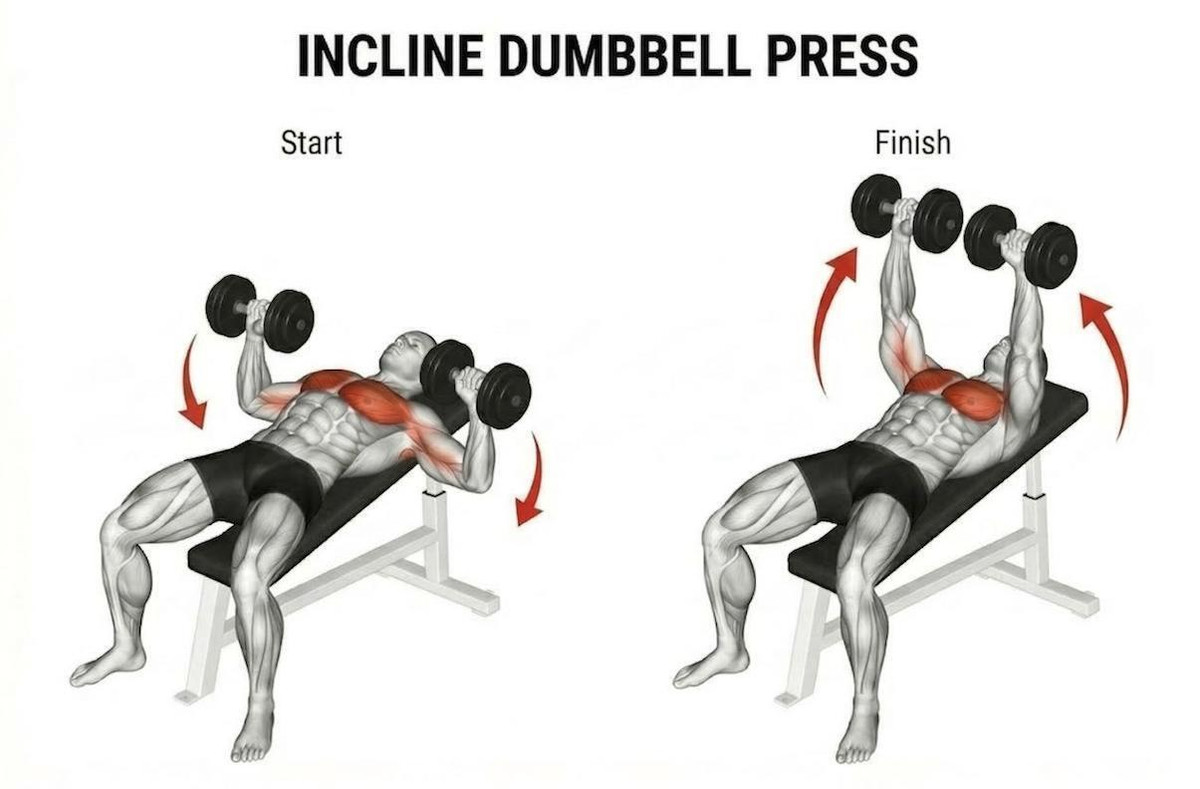
The incline dumbbell press shifts more emphasis toward the clavicular fibers of the pectoralis major while still training the triceps and front deltoids. A moderate incline is usually more chest-focused than a steep setup. Research comparing bench angles has found strong upper-pectoral activity around 30 degrees, while higher inclines increasingly involve the anterior deltoids.
How to Perform the Incline Dumbbell Press
- Set an adjustable bench to a moderate incline, using roughly 30 degrees as a practical starting point.
- Bring the dumbbells into position with the upper back supported and feet stable.
- Start with the dumbbells near the upper sides of the chest.
- Press upward and slightly inward while maintaining control of both weights.
- Lower until you reach a strong but comfortable stretch without the shoulders rolling forward.
When to Adjust the Bench Angle
If the movement feels almost entirely like a shoulder press, lower the bench one or two positions. If a very low incline feels identical to your flat press and you want more upper-chest emphasis, increase it slightly. The goal is not to chase a specific number at the expense of a strong, repeatable pressing path.
3. Decline Dumbbell Press
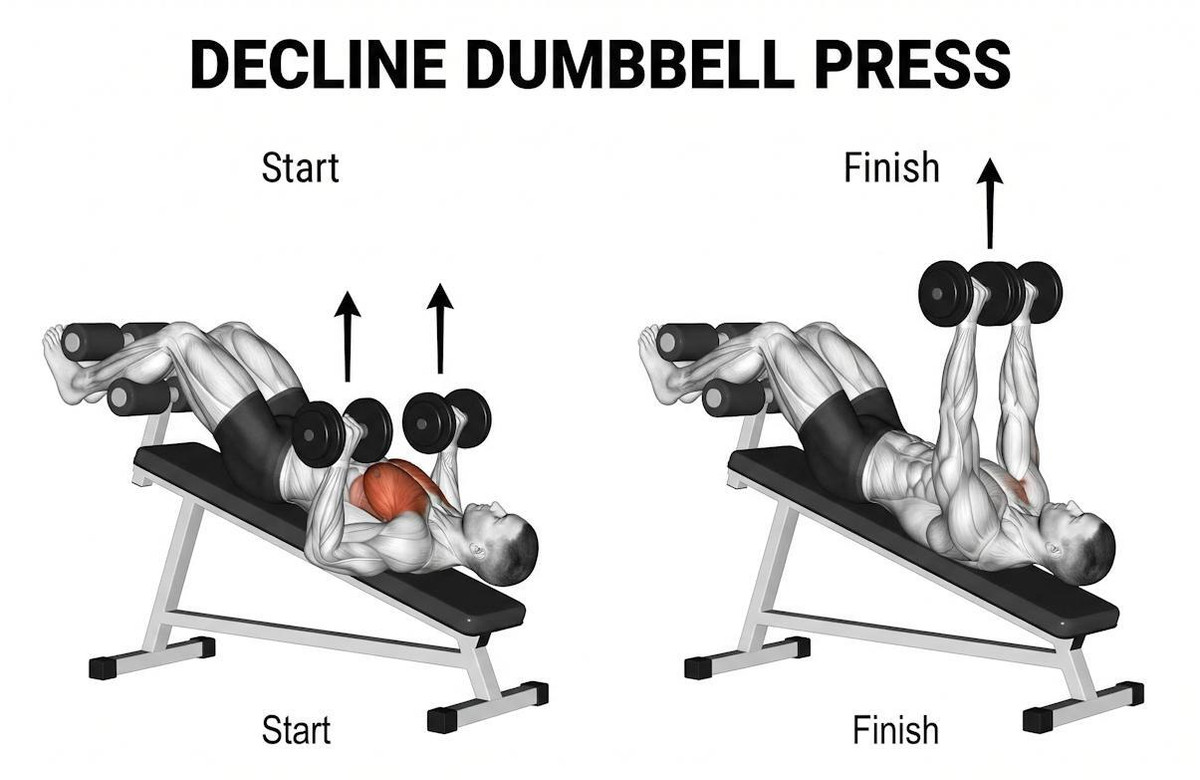
The decline dumbbell press changes the pressing angle so the sternocostal portion of the chest can contribute strongly with somewhat less shoulder flexion than an incline press. It can be a useful optional movement for lifters who like the setup and want a different press angle, but a complete chest routine does not require decline work if flat and incline pressing already cover the program well.
How to Perform the Decline Dumbbell Press
- Use a secure decline bench that supports the legs and keeps the body stable.
- Get the dumbbells into position before locking the feet or legs into the bench setup.
- Lower the weights toward the lower-to-mid chest with the forearms controlled.
- Press back up without letting the dumbbells drift toward the face.
- Finish the set with a safe plan for returning the dumbbells rather than sitting up abruptly with heavy weights.
Who May Skip It?
Decline pressing can be awkward to set up with heavy dumbbells, especially when training alone. If the entry and exit from the bench are more difficult than the exercise is valuable, flat pressing or a slight decline variation may be the better choice.
4. Dumbbell Chest Fly
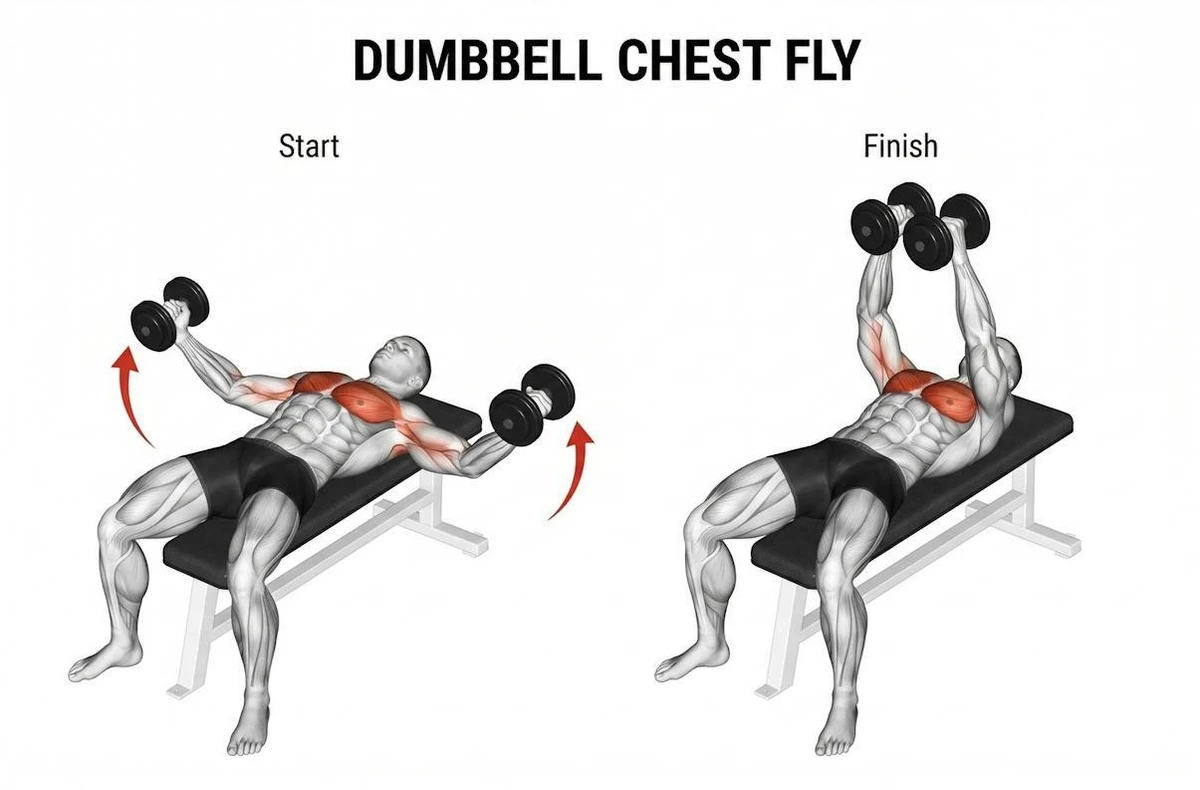
The dumbbell chest fly is a chest-focused accessory exercise built around horizontal adduction at the shoulder. Compared with a press, the elbows remain more fixed while the arms move in a wide arc. That makes the exercise useful for adding chest volume without making every set another heavy press.
Flyes generally require less load than presses. Research comparing heavy barbell bench pressing with dumbbell flyes has shown greater overall activation of the major pressing muscles during the bench press, which is another reason to treat flyes as complementary work rather than a replacement for a primary press.
How to Perform the Dumbbell Chest Fly
- Lie on a flat bench with the dumbbells above the chest and palms facing one another.
- Maintain a soft, nearly fixed bend in the elbows.
- Open the arms in a controlled arc until you reach a comfortable chest stretch.
- Reverse the motion by bringing the upper arms back toward the midline.
- Stop before the dumbbells collide or before the shoulders roll forward at the top.
Do Not Turn the Fly into a Press
If the elbows bend more and more as the set gets difficult, the exercise gradually becomes a pressing movement. Reduce the weight enough to keep the intended arm shape and movement pattern consistent.
5. Incline Dumbbell Fly
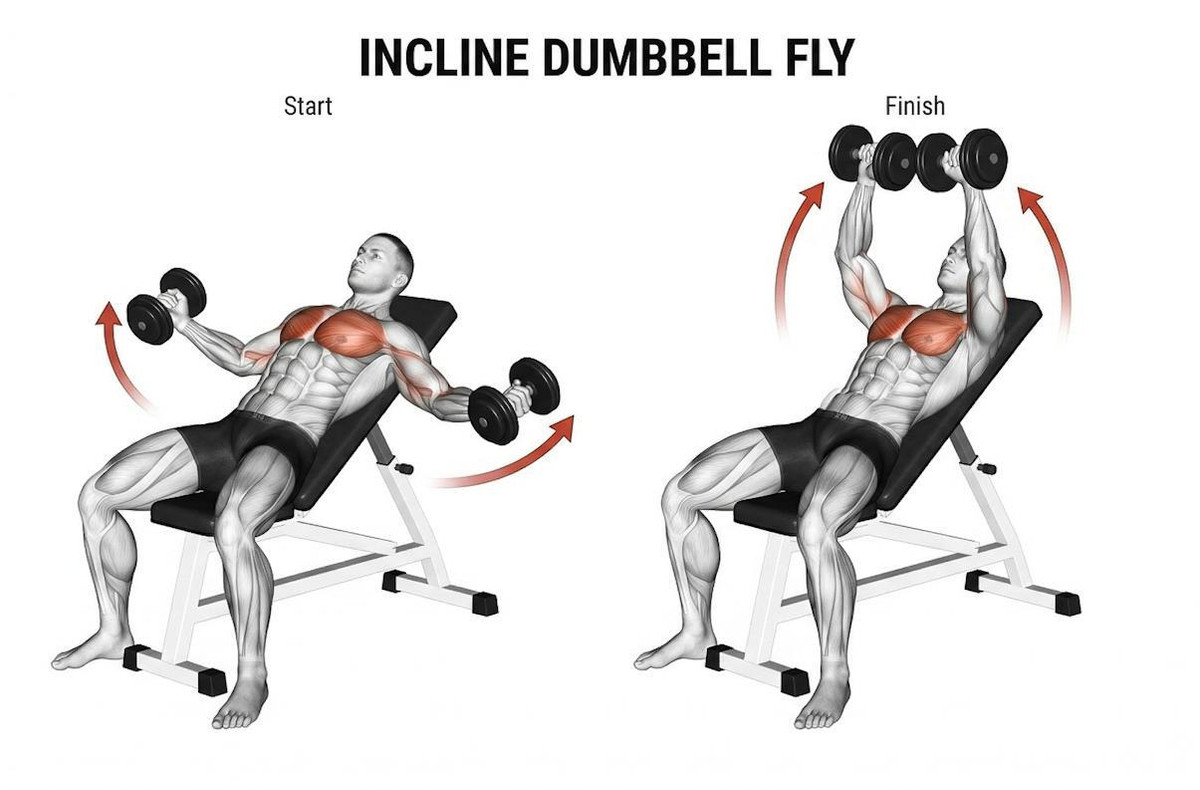
The incline dumbbell fly uses the same basic fly pattern on an inclined bench. It can complement incline pressing when a program needs additional chest-focused volume without adding another heavy compound press. As with incline pressing, a moderate bench angle generally keeps the movement more chest-oriented than a steep setup.
How to Perform the Incline Dumbbell Fly
- Set the bench to a low-to-moderate incline.
- Start with light dumbbells above the upper chest.
- Keep a small bend in the elbows and open the arms gradually.
- Stop at the deepest comfortable position you can control.
- Bring the arms back together through the same arc without using momentum.
Why Lighter Loads Usually Work Better
The lever arm in a fly is long, so relatively modest dumbbells can create substantial torque at the shoulder. Using lighter weights makes it easier to preserve the intended path, control the stretched position, and keep the exercise chest-focused.
6. Dumbbell Pullover
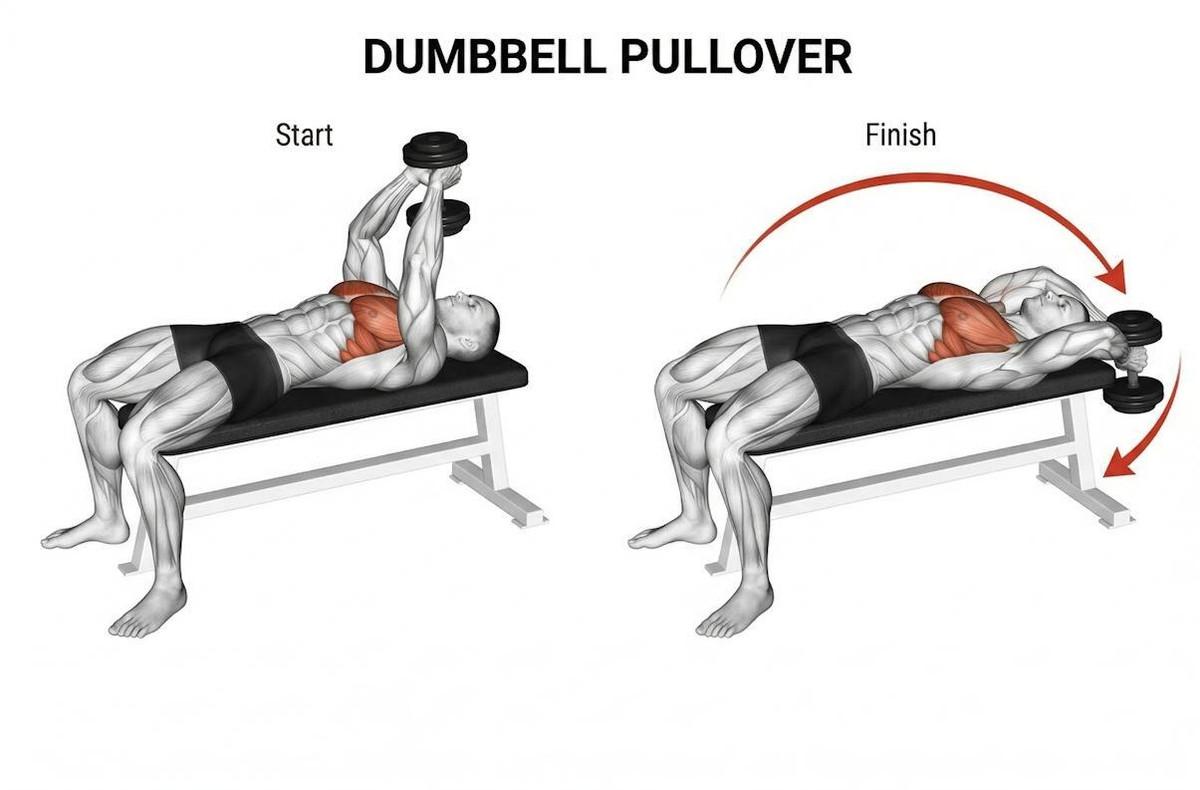
The dumbbell pullover is an upper-body accessory rather than a pure chest isolation exercise. The movement can involve the pectoralis major, latissimus dorsi, serratus anterior, triceps long head, and other muscles that help control shoulder extension and the rib-cage-to-arm relationship. Some lifters feel pullovers primarily in the chest, while others feel them more in the lats.
How to Perform the Dumbbell Pullover
- Lie securely on a bench and hold one dumbbell above the chest with both hands.
- Keep a slight bend in the elbows.
- Lower the dumbbell behind the head only as far as your shoulders can move comfortably without the rib cage flaring excessively.
- Pull the weight back over the chest while maintaining control.
Use Pullovers as an Optional Accessory
If your main goal is chest growth, prioritize presses and a chest-focused adduction movement first. Pullovers can add variety, but they do not need to displace more direct chest exercises unless you specifically enjoy and respond well to them.
7. Dumbbell Squeeze Press
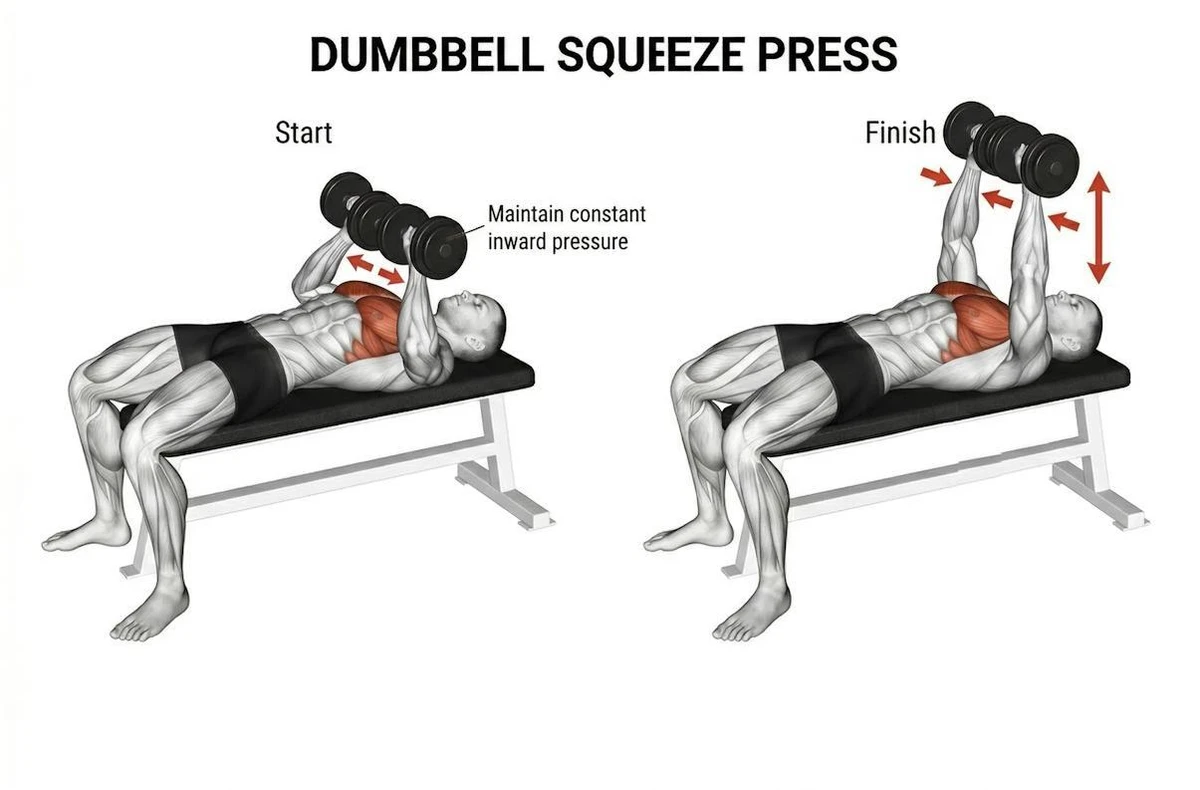
The dumbbell squeeze press, sometimes called a crush press, places the dumbbells together while the lifter actively presses them inward throughout the repetition. That creates continuous horizontal-adduction intent while the elbows extend. Because the dumbbells touch, the exercise usually uses less load and less bottom-range stretch than a conventional dumbbell press.
How to Perform the Dumbbell Squeeze Press
- Lie on a flat or low-incline bench with the dumbbells touching over the chest.
- Press the dumbbells firmly toward one another.
- Lower both weights together toward the chest while maintaining inward pressure.
- Press upward while continuing to squeeze the dumbbells together.
Best Use
The squeeze press works well as a later-session accessory when the chest is already fatigued from heavier pressing. It is not a special "inner chest" exercise, but many lifters like the strong contraction and controlled loading it provides.
Additional Dumbbell Chest Variations
8. Dumbbell Floor Press
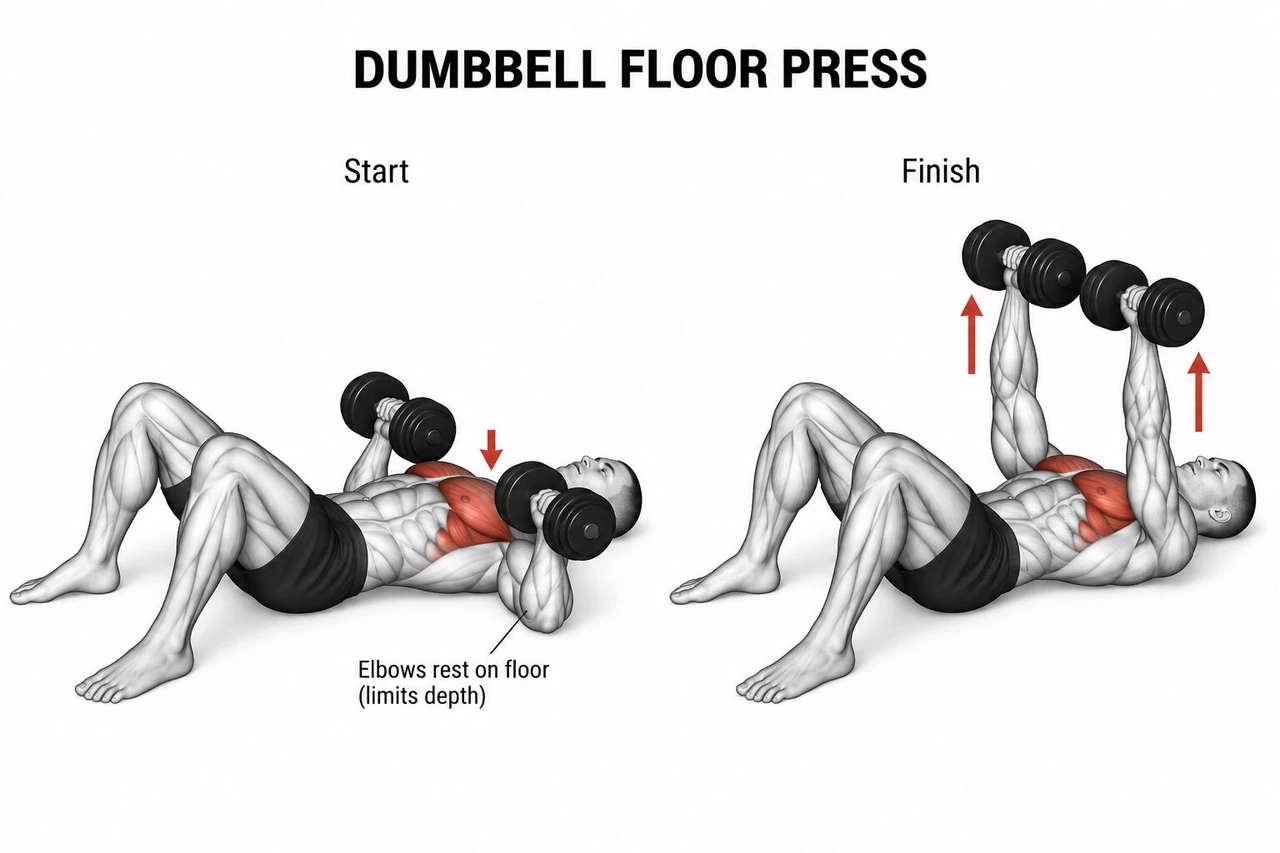
The dumbbell floor press is one of the best options for a chest workout with dumbbells and no bench. The floor stops the upper arms before they travel far behind the torso, reducing the bottom range compared with a bench press. That can make the movement easier to set up and more comfortable for lifters who do not want deep shoulder extension.
Lie on the floor with the knees bent, position the dumbbells at the sides of the chest, press to full control, then lower until the upper arms contact the floor gently. Do not bounce the elbows off the floor.
9. Neutral-Grip Dumbbell Press
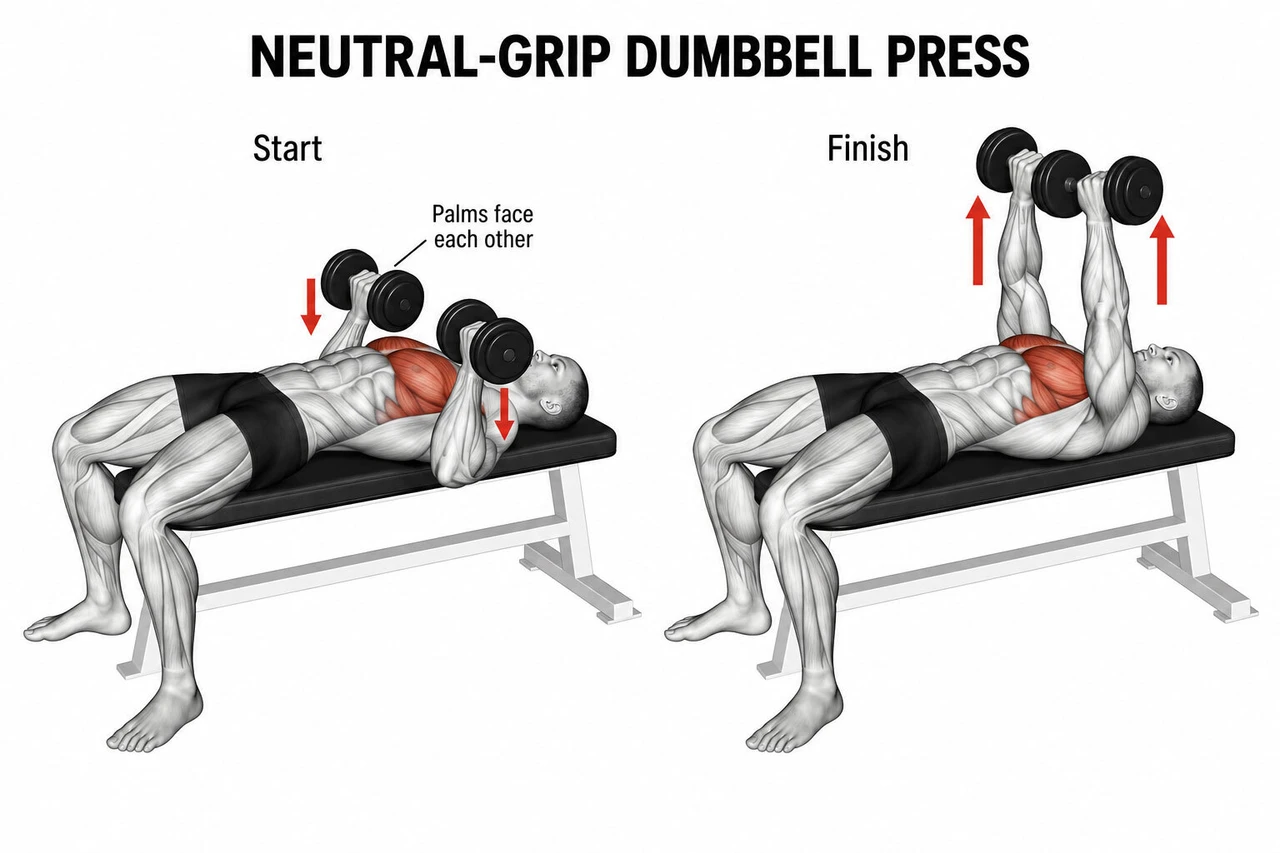
A neutral-grip press keeps the palms facing one another. It changes the shoulder and elbow position and may feel more comfortable for some lifters. It is not automatically safer for every shoulder, but it is a useful variation when a standard palms-forward grip feels awkward.
10. Single-Arm Dumbbell Press
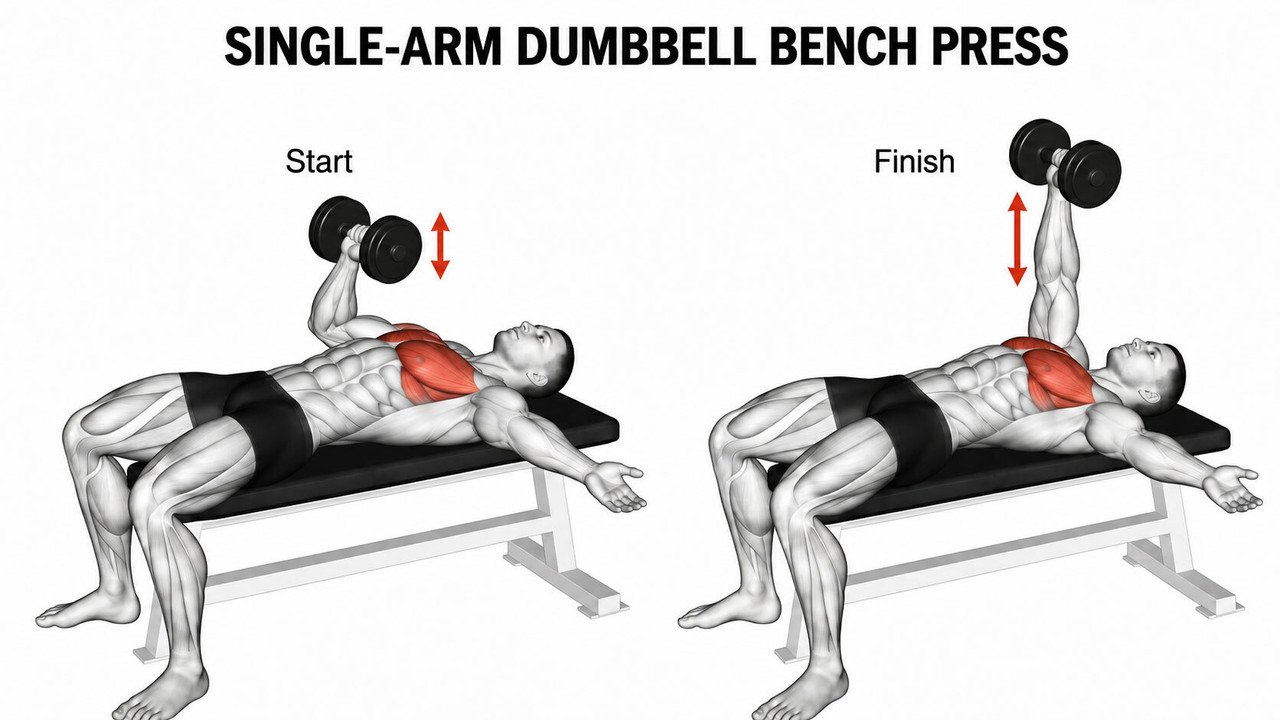
A single-arm press allows one side to work while the trunk resists rotation. It can be performed on a bench or floor and is useful when only one dumbbell is available. Use a conservative load because the asymmetrical setup increases the demand on trunk control and bench stability.
11. Alternating Dumbbell Press
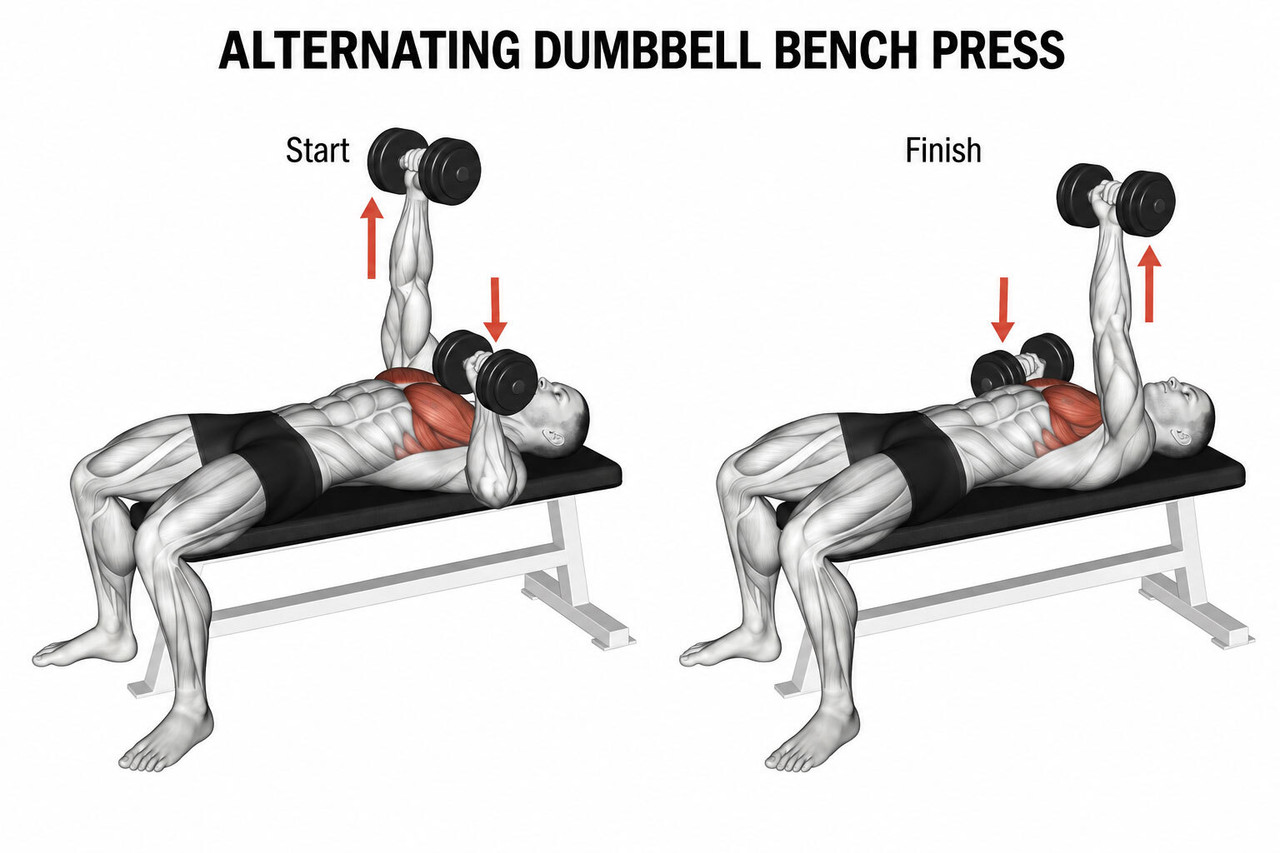
An alternating press keeps one dumbbell controlled while the other arm performs a repetition. It increases time under tension and coordination demands, but it usually reduces how much total load or how many repetitions can be completed. Use it as a variation rather than assuming it is superior to simultaneous pressing.
Complete Dumbbell Chest Workout Plans
You do not need to perform all ten exercises in one session. Most productive workouts use two pressing patterns plus one or two accessory movements. The plans below provide different starting points depending on experience, equipment, and training goal.
Beginner Dumbbell Chest Workout
| Exercise | Sets | Reps | Rest |
|---|---|---|---|
| Dumbbell Bench Press | 3 | 8–12 | 2 min |
| Incline Dumbbell Press | 3 | 8–12 | 2 min |
| Dumbbell Chest Fly | 2 | 10–15 | 60–90 sec |
Keep the first several weeks simple. Learn consistent setup and range of motion before adding more exercises or forcing rapid load increases.
Hypertrophy-Focused Dumbbell Chest Workout
| Exercise | Sets | Reps | Rest |
|---|---|---|---|
| Dumbbell Bench Press | 3 | 6–10 | 2–3 min |
| Incline Dumbbell Press | 3 | 8–12 | 2 min |
| Dumbbell Chest Fly | 3 | 10–15 | 60–90 sec |
| Dumbbell Squeeze Press | 2 | 10–15 | 60–90 sec |
Strength-Focused Dumbbell Chest Workout
| Exercise | Sets | Reps | Rest |
|---|---|---|---|
| Dumbbell Bench Press | 4 | 5–8 | 2–3 min |
| Incline Dumbbell Press | 3 | 6–10 | 2 min |
| Dumbbell Floor Press | 2 | 6–10 | 2 min |
| Dumbbell Chest Fly | 2 | 10–15 | 60–90 sec |
No-Bench Dumbbell Chest Workout
| Exercise | Sets | Reps | Rest |
|---|---|---|---|
| Dumbbell Floor Press | 4 | 6–12 | 2 min |
| Single-Arm Floor Press | 3 each side | 8–12 | 60–90 sec |
| Floor Squeeze Press | 3 | 10–15 | 60–90 sec |
Two-Day Dumbbell Chest Split
Splitting weekly chest work across two sessions can make it easier to maintain repetition quality and distribute volume. One day can emphasize heavier pressing while the second emphasizes moderate-load pressing and accessory work.
| Day A: Heavier Pressing | Day B: Hypertrophy & Control |
|---|---|
| Flat Dumbbell Press: 4 × 5–8 | Incline Dumbbell Press: 3 × 8–12 |
| Incline Dumbbell Press: 3 × 6–10 | Dumbbell Fly: 3 × 10–15 |
| Squeeze Press: 2 × 10–15 | Squeeze Press or Pullover: 2 × 10–15 |
Dumbbell Chest Workout Sets, Reps, Weight & Progression
Choose the Load by Repetition Quality
The right dumbbell weight is one that lets you complete the target repetition range with consistent technique while making the final repetitions meaningfully challenging. If you could perform many extra repetitions after every set, the load or effort is probably too low for efficient strength or hypertrophy work. If form breaks down before you reach the target range, reduce the load.
For most working sets, stopping with roughly one to three good repetitions still available is a practical approach. Training to complete muscular failure is not required for every set, and the 2026 American College of Sports Medicine position stand found that momentary failure did not consistently determine results for the average healthy adult.
Rep Ranges
- Strength emphasis: often 5–8 repetitions on primary dumbbell presses.
- General hypertrophy: often 6–12 repetitions on presses and 10–15 on flyes or lighter accessories.
- Higher-rep accessory work: 12–20 can be appropriate when the exercise remains controlled and load progression is still possible.
Muscle can grow across a broad range of repetitions when sets are sufficiently challenging. Rep ranges are useful programming tools, not rigid biological boundaries.
Weekly Chest Volume
The 2026 ACSM resistance-training guidance identifies higher weekly volume as an important factor for hypertrophy and uses roughly 10 sets per muscle group per week as a practical target. That is not a mandatory number for everyone. Beginners may progress with less, while experienced lifters may need more depending on exercise selection, effort, recovery, and how much indirect chest work appears elsewhere in the program.
Rest Between Sets
Allow enough rest to repeat the intended performance. Heavy presses often benefit from around two to three minutes between challenging sets. Lighter flyes and squeeze presses can often use shorter rests of about one to two minutes. If repetitions collapse because you are still breathing hard or the target muscles have not recovered, extend the rest period.
How to Progress
A simple double-progression method works well with dumbbells. Choose a rep range such as 8–12. Keep the same dumbbell weight until you can reach the top of the range with clean technique across all working sets. Then move to the next available pair and build the repetitions back up.
If the jump between dumbbell sizes is large, progression can also come from an extra repetition, an additional set, improved range of motion, better tempo control, or a harder variation before increasing load.
Programming principle: Keep the exercises stable long enough to measure progress. Constantly changing every press and fly variation can make workouts interesting, but it also makes it harder to know whether strength and performance are actually improving.
How to Warm Up for a Dumbbell Chest Workout
A warm-up should prepare the shoulders, elbows, upper back, and pressing pattern without creating fatigue before the work sets begin. You do not need a long ritual.
- Raise general temperature: use several minutes of easy movement if you are starting cold.
- Move the shoulders through comfortable ranges: controlled arm circles, scapular movement, or light band work can help you feel the positions you will use.
- Perform ramp-up sets: use lighter dumbbells for one to three progressively heavier sets before the first challenging press.
- Practice the exact setup: bench angle, foot position, dumbbell kick-up, and shoulder position should feel familiar before the heaviest set.
The heavier the working weight, the more useful gradual ramp-up sets become. Warm-up sets should improve readiness, not exhaust the chest.
Common Dumbbell Chest Training Mistakes
Using Too Many Similar Presses
Flat press, low-incline press, high-incline press, decline press, and floor press are all useful, but doing all of them in one workout often creates more repetition than benefit. Choose angles that serve different purposes instead of collecting every variation.
Setting the Incline Too High
A steep incline can turn an upper-chest press into a movement dominated by the front deltoids. If upper-chest emphasis is the goal, a moderate incline around 30 degrees is a strong starting point.
Flaring the Elbows Aggressively
Forcing the elbows straight out from the shoulders can be uncomfortable for many lifters. Let the elbows track in a position that keeps the forearms controlled and the shoulders stable.
Dropping Too Deep on Flyes
The stretched position should feel like a controlled chest stretch, not a forced shoulder stretch. Because the dumbbells create a long lever arm, going farther is not automatically more effective.
Letting the Dumbbells Crash Together
Hitting the dumbbells together at the top adds noise and can disrupt control without creating a meaningful training advantage. Finish the press with the weights stable and close enough to maintain the intended path.
Confusing Soreness with Progress
A workout does not need to create extreme next-day soreness to be effective. Track load, repetitions, technique, weekly volume, and recovery rather than judging every session by soreness alone.
Training Every Set to Failure
Failure can be used selectively, especially on lighter accessories, but it is not necessary on every set. Stopping slightly short of failure often preserves repetition quality and makes it easier to manage total weekly training.
Dumbbell Chest Workout Safety
- Have a plan for getting the weights into and out of position. The set is not over until the dumbbells are safely controlled.
- Use a stable bench. The bench should be rated for the combined user and dumbbell load and should lock securely at the selected angle.
- Use a spotter when appropriate. Heavy dumbbell presses can become difficult to exit safely when a repetition fails unexpectedly.
- Do not force painful range of motion. Discomfort from effort is different from sharp or joint-specific pain.
- Keep the floor clear. Dumbbells placed near the bench can become trip hazards when getting up after a set.
- Progress gradually. Large jumps in dumbbell weight can change both the loading and the difficulty of getting the weights into position.
Anyone with an injury, recent surgery, significant shoulder limitation, or uncertainty about exercise selection should get individualized guidance from an appropriate qualified professional before progressing heavy resistance training.
Shoulder-Friendly Adjustments
If a conventional dumbbell press is uncomfortable, useful modifications may include reducing the bottom range, using a neutral or semi-neutral grip, lowering the bench angle, using a floor press, or reducing the load. These are options to test, not guarantees that one setup will work for every shoulder.
What Equipment Do You Need?
A basic dumbbell chest setup requires surprisingly little equipment. A pair of dumbbells and enough floor space can support floor presses and unilateral work. Adding an adjustable bench greatly expands the exercise menu by providing flat and incline positions.
For home gyms, adjustable dumbbells can reduce storage needs, while fixed dumbbells make weight changes faster. Shared facilities typically benefit from broader fixed-weight runs so multiple users can train at the same time. You can compare current dumbbells and adjustable weight benches when planning a complete setup.
Bench Features That Matter for Chest Training
- Stable flat position for general pressing and flyes
- Multiple incline positions, including a moderate chest-focused incline
- Secure back-pad locking system
- Appropriate capacity for the user plus dumbbells
- Enough bench length and pad support for the intended users
- Wheels or transport handles when frequent movement is expected
How Much Dumbbell Range Do You Need?
The required weight range depends on the strongest pressing movement, not the lightest accessory. Flyes and raises may use modest weights while dumbbell presses can progress much higher. When buying a fixed set, plan enough headroom for future strength gains instead of selecting only the weights you use today.
Frequently Asked Questions
What is the best dumbbell exercise for chest?
The flat dumbbell bench press is one of the best all-around choices because it can be loaded progressively, trains the pectoralis major through a large pressing range, and is easy to track over time. The incline dumbbell press is an excellent second movement when upper-chest emphasis is important.
Can you build a big chest using only dumbbells?
Yes. Dumbbells can provide progressive resistance for flat, incline, decline, fly, squeeze, and floor-press variations. Chest growth depends on applying enough challenging training volume and progressing over time, not on using a barbell or machine specifically.
How many dumbbell chest exercises should I do per workout?
Three to four exercises are enough for most sessions. A primary flat or incline press, a second complementary press, and one or two accessories can provide substantial training without unnecessary repetition.
How many sets should I do for chest each week?
Around 10 challenging sets per week is a useful hypertrophy reference point from current resistance-training guidance, but individual needs vary. Beginners may make progress with less, while experienced lifters may use more depending on effort, exercise selection, and recovery.
How often should I train chest with dumbbells?
One to three weekly sessions can work depending on the program. Two sessions are often convenient because they distribute weekly volume and reduce the need to perform a large number of chest sets in one workout.
How heavy should dumbbells be for a chest workout?
Choose a load that lets you complete the target rep range with consistent form while making the final repetitions challenging. If you can easily exceed the top of the range, increase the resistance. If technique breaks before the target is reached, use lighter dumbbells.
Are dumbbells better than barbells for chest?
Neither is universally better. Dumbbells allow independent-arm loading and more freedom in grip and movement path. Barbells usually allow heavier absolute loading and can make progressive strength work easier to standardize. Both can be effective for chest strength and hypertrophy.
Are dumbbells better than chest machines?
They serve different purposes. Dumbbells require the user to control each load independently, while machines provide more external stability and can make targeted training near fatigue easier. Many effective programs use both.
What is the best incline angle for dumbbell chest press?
Around 30 degrees is a strong starting point for upper-chest emphasis. Research has found increased clavicular pectoralis activity near this angle, while steeper inclines increasingly involve the anterior deltoids. Comfort and individual anatomy still matter.
Can I do a dumbbell chest workout without a bench?
Yes. Dumbbell floor presses, single-arm floor presses, and floor squeeze presses can create a complete pressing session. The floor limits the bottom range compared with a bench, so it is not identical to bench pressing, but it is a useful no-bench option.
Can I train chest with one dumbbell?
Yes. Single-arm floor or bench presses and two-hand dumbbell pullovers can be performed with one dumbbell. A single-arm press also adds a trunk-control challenge because the load is asymmetrical.
How do I target the upper chest with dumbbells?
Use a moderate incline dumbbell press as the primary movement. An incline fly can provide additional chest-focused volume. Avoid setting the bench so steep that the movement becomes predominantly a shoulder press.
How do I target the lower chest with dumbbells?
A decline dumbbell press can increase emphasis on sternocostal chest fibers for some lifters. Flat pressing also trains this region well, so decline work is optional rather than required.
Can dumbbells target the inner chest?
There is no separate inner-chest muscle to isolate. Squeeze presses can create strong inward pressure and horizontal-adduction effort, but they still train the pectoralis major rather than a distinct inner compartment.
Should I do dumbbell flyes before or after presses?
Most lifters should press first when strength and progressive loading are priorities, then use flyes for additional chest-focused volume. Flyes can be performed first in specialized programming, but doing so will usually reduce the load available for subsequent pressing.
Do I need to train to failure to build my chest?
No. Challenging sets performed close to failure can be effective without taking every set to the point where another repetition is impossible. Current resistance-training guidance does not support mandatory failure training for the average healthy adult.
How long should a dumbbell chest workout take?
A focused session with three to four exercises generally takes about 35–60 minutes depending on the number of sets, warm-up needs, and rest periods. Longer is not automatically better if the additional work is repetitive or low quality.
Final Thoughts
The best chest workout with dumbbells is not the one with the most exercises. It is the one you can perform consistently, progress over time, and recover from. Flat and incline dumbbell presses provide a strong foundation, while flyes, squeeze presses, floor presses, decline work, and pullovers can be added when they serve a clear purpose.
Use controlled technique, select enough weekly volume to support your goal, and keep the main exercises stable long enough to measure progress. For home gyms, schools, studios, and commercial facilities, a well-planned dumbbell range paired with a stable adjustable bench can support years of chest and upper-body training without requiring a large collection of single-purpose equipment.
Explore dumbbells for home and commercial gyms or compare adjustable weightlifting benches to build a versatile free-weight training area.
EXPLORE POPULAR ARTICLES
-
Cable Machine Exercises: Complete Guide
Oct 09, 2026A Complete Guide to Cable Exercises, Pulley Positions and Attachments Estimated Reading Time: 30 Min
-
Leg Workout Machines: Names, Exercises & Muscles Worked
Oct 09, 2026A Complete Guide to Leg Machines, Exercises and Muscles Worked Estimated Reading Time: 30 Minutes Le
-
Back Workout Machines: Names, Exercises & Muscles Worked
Oct 07, 2026A Complete Guide to Back Machines, Exercises and Muscles Worked Estimated Reading Time: 30 Minutes B